

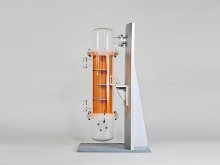
DAC Worldwide's Vertical Thermosyphon Reboiler Heat Exchanger Training Model (289) is a highly-detailed scale model of a vertical thermosyphon reboiler, supporting training in the operation and maintenance of industrial heat exchangers.
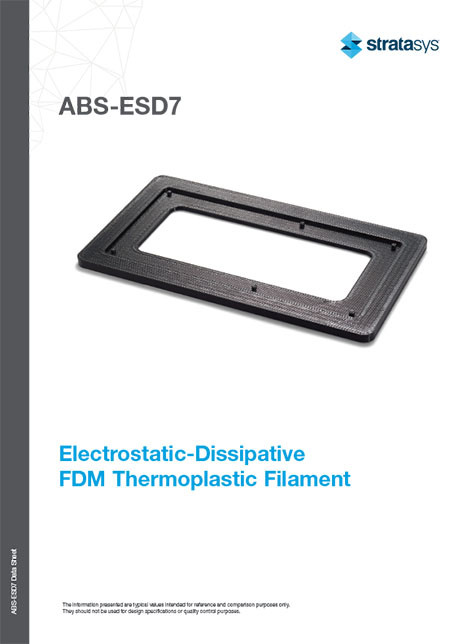
ABS-ESD7™ (acrylonitrile butadiene styrene-electrostatic dissipative) is an ABS thermoplastic with static dissipative properties suited for static discharge-sensitive applications. ABS-ESD7 prevents static electricity buildup, so it will not produce a discharge or attract other materials like powders, dust, and fine particles.
The material is ideal for jigs and fixtures used to fabricate and assemble electronic components and associated production line and conveyor parts. It is also useful for producing functional prototypes, enclosures, and packaging.
ABS-M30™ filament combines the design freedom of FDM® technology with the versatility and capability of ABS (acrylonitrile butadiene styrene). ABS is characterized by its strength and toughness, while being lightweight and resilient, suitable for most general-purpose 3D printing use cases.
ABS-M30i is a high-strength material well-suited for the medical, pharmaceutical and food packaging industries. Parts manufactured with ABS-M30i material are biocompatible (ISO 10993)* and can be gamma or EtO sterilized. In addition, ABS M30i has passed ISO 18562 testing for gas and airway parts for use in respiratory and ventilation medical devices. When combined with Fortus® 3D Printers, ABS-M30i gives you biocompatible parts with excellent mechanical properties well suited for conceptual modeling, functional prototyping, manufacturing tools and production parts.
Antero™ 840CN03 is a PEKK-based FDM thermoplastic combining the excellent physical and mechanical qualities of PEKK with electrostatic dissipative (ESD) properties. The material is filled 3% by weight with carbon nanotubes.
As a high-performance polymer, Antero 840CN03 exhibits exceptional chemical and wear resistance, ultra-low outgassing properties and consistent ESD performance. ESD values range from 104 – 109 ohms per square inch. This makes the material particularly suitable for space and industrial applications where these qualities are critical.
Antero™ 840CN03 is a high-performance PEKK-based FDM® thermoplastic with strong mechanical properties and exceptional material properties, such as electro-static dissipation, temperature resistance, chemical resistance, exceptional wear properties, and ultra-low outgassing. This makes it ideal for low-volume, highly-customized production parts and functional prototypes that must withstand more intemperate conditions. Antero 840CN03’s primary advantages over other Stratasys high-performance materials – such as ULTEM™ 9085 resin, ULTEM™ 1010 resin, and PPSF – are its ESD, high chemical resistance, and low outgassing properties.
System Overview and Compatibility
Antero 840CN03 is available on the Stratasys F900™ and Fortus 450mc™ with a 0.010 inch (0.254 mm) slice height. It uses SUP8000B™ as a breakaway support system, similar to other Stratasys high-temperature material offerings. This support material is easier to remove than the other breakaway support systems. Antero 840CN03 requires the hardened head upgrade and utilizes a custom T20F tip for the model material. Both systems use a standard T16 tip for the support material.
Antero 840CN03 and SUP8000B are available in standard 92.3 cubic inch Fortus Plus™ canisters only, and the material will use the existing high-temperature material build sheets.
Antero™ 800NA is a PEKK-based FDM® thermoplastic. It combines FDM’s design freedom and ease of use with the excellent strength, toughness, and wear-resistant properties of PEKK material.
Antero 800NA exhibits high heat resistance, chemical resistance, low outgassing, and dimensional stability, particularly in large parts.
Appropriate applications include aircraft components exposed to jet fuel, oil, and hydraulic fluid, spacecraft parts that demand low outgassing, and chemical-resistant industrial parts. Using Antero 800NA with FDM technology avoids the waste associated with subtractive manufacturing of high-cost bulk PEKK material.
Antero 800NA is available on Fortus 450mc™ and F900™ 3D Printers and is compatible with breakaway support material SUP8000B™.
ASA (acrylonitrile styrene acrylate) FDM® filament is a broad-use commodity thermoplastic. It is similar to ABS (acrylonitrile butadiene styrene) but exhibits better UV resistance, mechanical properties, and aesthetics than ABS.
ASA suits most general-purpose 3D printing applications involving prototyping, jigs and fixtures, and low-volume production parts. ASA filament is available in the most colors of any FDM material.
Offering a variety of production-grade thermoplastics, FDM® technology creates parts that are highly accurate, tough, and suitable for both functional prototyping and end-use parts. ABS is the most common material used as it boasts good mechanical properties and high name recognition. Compared with ASA, ABS may be more familiar because of its popularity in mass production.
ASA is another popular all-purpose material for jigs and fixtures, manufacturing aids, prototyping and limited-run end-use parts. ASA matches or exceeds the mechanical properties of standard ABS and has greater heat resistance. Moreover, ASA demonstrates exceptional UV stability and, with its matte finish, offers the best aesthetics of any FDM thermoplastic. It’s especially suited for end-use parts in outdoor commercial and infrastructure applications, and its wide array of color options surpasses that of ABS.
Addigy PA6/66-GF20 FR LS is a 20% glass-filled nylon polymer with fire-resistant, low-smoke properties and low levels of toxic fume emissions. PA6/66-GF20 FR LS complies with industry standards EN 45545-2, NFPA 130, SMP 800-C and FAR 25.853, making it a desirable material for transportation industry applications.
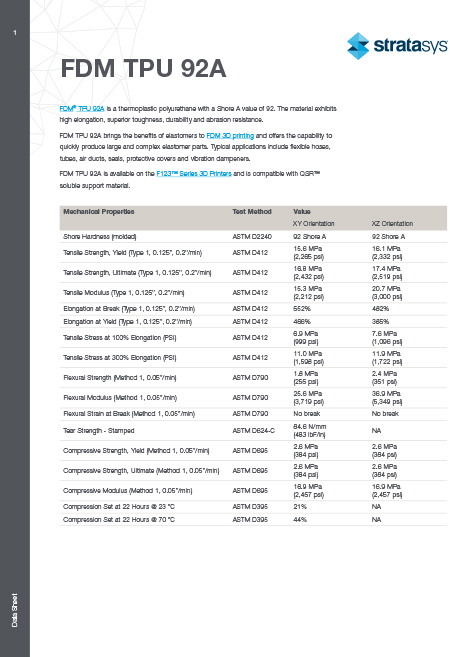
FDM® TPU 92A is a thermoplastic polyurethane with a Shore A value of 92. The material exhibits high elongation, superior toughness, durability, and abrasion resistance.
FDM TPU 92A brings the benefits of elastomers to FDM 3D printing and can quickly produce large and complex elastomer parts. Typical applications include flexible hoses, tubes, air ducts, seals, protective covers, and vibration dampeners.
FDM TPU 92A is available on the F123™ Series 3D Printers and is compatible with QSR™ soluble support material.
Pages
-
 Item Number:289
 -
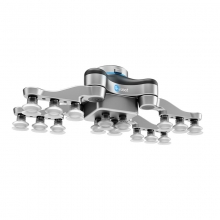 Item Number:VG10The compact OnRobot VG10 Universal Robot Vacuum Gripper doesn't require a compressor or air supply bringing flexibility to your production line and saving maintenance costs. It has flexible arms and an adjustable vacuum enabling the VG10 to handle a variety of objects in many different sizes.
 -
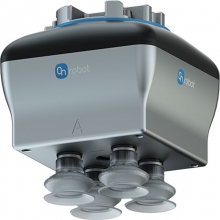 Item Number:VGC10The OnRobot VGC10 electrical compact universal robot vacuum gripper has unlimited customization possibilities. Smaller than the VG10, the VGC10 can fit into tight environments to extend your automation possibilities.
 -
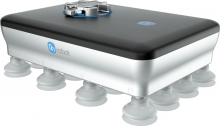 Item Number:VGP20With payloads up to 20kg, the OnRobot VGP20 is a powerful electric powered universal robot vacuum gripper ideal for quickly and cost-effectively automating the palletizing of cardboard boxes, as well as handling bulky, porous, and irregularly shaped objects.
 -
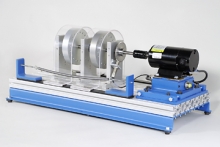 Item Number:203-000DAC Worldwide’s Vibration Analysis Training System (203-000) is a heavy-duty learning package that allows for in-depth training in vibration analysis, using a vibration meter, gear/belt drives, and bearing faults.
 -
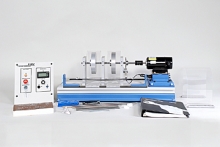 Item Number:203-PACDAC Worldwide’s Vibration Analysis Training System Plus (203-PAC) is a heavy-duty learning package that allows for in-depth training in vibration analysis, using a vibration meter, gear/belt drives, and bearing faults.
 -
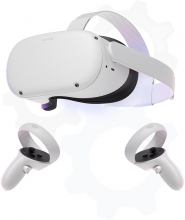 With our Workplace Safety package, you get four modules that allow learners to put safety training into practice in a safe, virtual environment.
 -
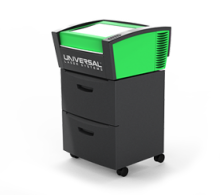 Item Number:VLS 2.30DTThe VLS2.30DT Desktop is a compact and economical entry-level platform. It offers a material processing envelope of 16" x 12" x 4" or 768 in³ and can be equipped with one 10.6µm CO2 laser source ranging in power from 10 to 30 watts or one 9.3µm CO2 30 watt laser source.
 -
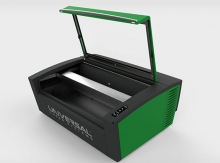 Item Number:VLS3.60DTThe VLS3.60DT is a compact and economical entry-level platform that offers a material processing envelope of 24" x 12" x 4" or 1,152 in³. The VLS3.60DT can be equipped with one of five 10.6µm CO2 laser sources ranging in power from 10 to 60 watts or one 9.3µm CO2 30 watt or 50-watt laser source.
 -
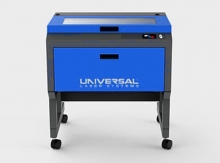 Item Number:VLS3.75The VLS3.75 is a free-standing platform with a materials processing envelope of 24" x 12" x 8.5" or 2,448 in³. The single laser platform supports a 10.6µm CO2 laser source ranging in power from 10 to 75 watts or one 9.3µm CO2 30 watt, 50 watt, or 75 watt laser source.