This system’s value is twofold: first it provides vital training experience for learners and professionals that will perform industrial maintenance, installation, and troubleshooting on pneumatic systems used in real-world automation machinery, packaging equipment, pharmaceutical applications, chemical handling tasks, and more. Secondly, this system features industry-standard valves, switches, and gauges all within a portable learning system that can be placed on a conference room table, shop floor desk, or practically anywhere when training space is limited.
-
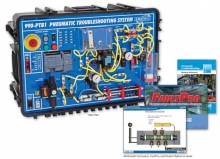 Item Number:990-PTB1
 -
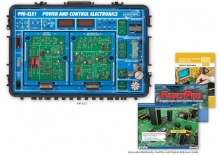 Item Number:990-ELE1Amatrol’s Portable Power and Control Electronics Learning System (990-ELE1) covers how to operate, adjust, and troubleshoot electronic components, circuits, and systems used in machine applications. The portable learning system allows for on-the-go exploration of the fundamental concepts of industrial power and control electronics, such as measuring temperature, speed, and analog signals. The 990-ELE1 provides skills and topics that will be invaluable in industries like manufacturing, transportation, energy, and construction.
 -
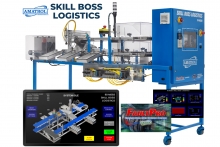 Item Number:95-MSB3The Amatrol Skill Boss Logistics offers a performance-based assessment for evaluating the skills and competencies of future supply chain automation technicians.
 -
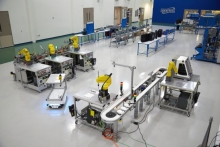 The Smart Factory is a fully connected and flexible manufacturing system that connects its physical systems, operational information, and human assets to control manufacturing, maintenance, inventory, and supply chain operations.
 -
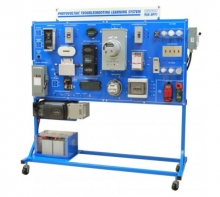 Item Number:950-SPT1The 950-SPT1 teaches students connection, operation, programming, and troubleshooting of AC/DC and grid-connected systems. The curriculum is PC-based multimedia that is highly interactive. It allows students to use the learning style best for them – reading, listening, visual. The 950-SPT1 supports the NABCEP (North American Board of Certified Energy Practitioners) test for Certified Solar Photovoltaic System Installer.
 -
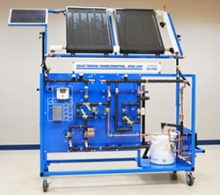 Item Number:950-STOL1The 950-STOL1 includes all components needed to develop hands-on, job ready skills: all solar specific components as well as balance of system items. The learning system contains a mobile workstation, multiple component circuit panels, a solar collector unit, fault insertion, PC-based multimedia student curriculum, and instructor’s assessment guide. An optional sun simulator is available to facilitate classes indoors when outdoor conditions do not support solar heating.
 -
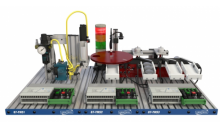 Item Number:870-PTAB82Amatrol’s Tabletop Mechatronics is a portable, durable, affordable learning system that forms a fully automated line to teach real-world mechatronics skills. This learning system features a pick-and-place, gauging, and inventory station, all of which fit on a standard tabletop!
 -
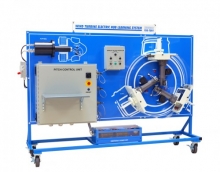 Item Number:950-TEH1Amatrol's 950-TEH1 Turbine Electric Hub Troubleshooting Learning System teaches students adaptive skills for wind turbine operation, adjustment, and troubleshooting in a wide variety of situations. The 950-TEH1 allows students to develop and practice component, subsystem, and system-level skills. The fully functional, scaled-down utility-scale turbine electric hub. The Turbine Electric Hub Troubleshooting Learning System includes...
 -
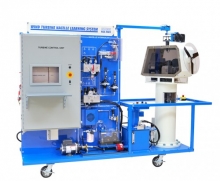 Item Number:950-TNC1Amatrol’s 950-TNC1 Turbine Electric Hub Troubleshooting Learning System allows students to learn the skills required for wind turbine operation, adjustment, and troubleshooting.
 -
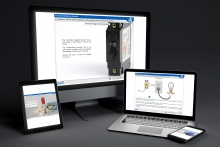 Amatrol’s virtual trainers replicate physical systems in such detail that students can build skills even when they don’t have access to actual equipment.