This system’s value is twofold: first it provides vital training experience for learners and professionals that will perform industrial maintenance, installation, and troubleshooting on pneumatic systems used in real-world automation machinery, packaging equipment, pharmaceutical applications, chemical handling tasks, and more. Secondly, this system features industry-standard valves, switches, and gauges all within a portable learning system that can be placed on a conference room table, shop floor desk, or practically anywhere when training space is limited.
Centralized Simulator Management for Smarter Training Operations
Enhance the power of your Simlog Personal Simulators with Simulation Manager—a secure, centralized platform that stores and tracks all simulation results across users and devices. Designed for training programs with multiple users or simulators, Simulation Manager streamlines data collection, performance review, and reporting.
With one installation, you can create user logins, assign trainees to classes, and store all results in a single database—whether you’re using one simulator or a network of training stations. Simulation Manager also includes an external Viewer for remote access and performance evaluation, making it an essential tool for scalable, professional-grade training environments.
Compatible with all Simlog Personal Simulators, Simulation Manager is the professional solution for managing operator development across your workforce training program.
Request a demo or contact us for a quote to get started.
City of Kitchener Saves Time and Trains More Operators with Simlog Simulation
The City of Kitchener transformed its equipment operator training by integrating Simlog’s Hydraulic Excavator Personal Simulator and Simulation Manager into a new in-house program. Facing a shortage of skilled operators and low hiring success rates, the city implemented simulator-based training to identify internal talent, reduce testing overhead, and ensure operator safety before field training.
This approach resulted in a 500% increase in successful operator promotions and saved over 240 man-hours in just one year. Employees trained on their time, progressing through customized benchmarks that measured aptitude and readiness—before ever touching real equipment. With reduced costs, improved efficiency, and a fast ROI, the City now plans to expand its simulator lab and support regional training collaborations.
Key ROI Highlights:
- 240+ man-hours saved in one year
- $16,000 in labor and equipment cost savings
- Simulator paid for itself in under 6 months
- 500% increase in operator readiness
- 30 trainees screened, 8 fully certified—all promoted internally
We are a proud distributor of Simlog simulation solutions. Reach out to us today to learn how to replicate this success in your training program.
The Backfilling 1 module of Simlog’s Bulldozer Personal Simulator introduces trainees to essential earthmoving tasks in a controlled, virtual setting. Operators learn how to manage blade position, material flow, and movement control to efficiently backfill trenches and depressions—skills critical on real-world construction sites.
This video demonstrates how the simulator reinforces key techniques like forward pushing, blade leveling, and maintaining smooth, consistent backfill layers. With a focus on safety, precision, and production efficiency, this module helps new operators gain confidence while reducing risk and training costs.
The Bench Loading with Truck Spotting – Boulders module challenges excavator trainees to perform coordinated, high-efficiency rock loading. Using Simlog’s Hydraulic Excavator Personal Simulator, operators gain experience loading large boulders into haul trucks while managing swing angles, bucket fill, and truck positioning in a realistic bench setup.
This video highlights how the simulator trains users to safely load heavy material with precision while working alongside other equipment. It reinforces essential skills such as communication, spatial awareness, and cycle time optimization—preparing trainees for demanding job site conditions in mining, construction, and earthworks industries.
The Boulder Control module in Simlog’s Bulldozer Personal Simulator teaches operators how to manage large, heavy rocks in rugged work environments. This exercise focuses on developing the skill to control boulder movement using precise blade positioning and smooth track operation—key competencies for mining, quarrying, and land-clearing jobs.
This video demonstration showcases how trainees learn to manipulate boulders safely and effectively without causing equipment damage or job site hazards. It’s a hands-on simulation that promotes real-world problem-solving, coordination, and material handling techniques critical to operator success.
The Bucket Positioning module in Simlog’s Backhoe Loader Personal Simulator helps trainees master one of the most fundamental skills in earthmoving: controlling bucket position with accuracy and consistency. This module focuses on arm, boom, and bucket coordination to improve excavation readiness and minimize job site errors.
In this video demo, operators practice aligning the bucket for digging, trenching, and loading tasks. It’s a foundational training experience that prepares learners for more complex operations while reinforcing safe habits, efficient movement, and equipment awareness from the ground up.
The Complete Haul Cycle 2 module in Simlog’s Off-Highway Truck Personal Simulator offers a comprehensive training scenario that mirrors the full workflow of material transport in large-scale mining or construction sites. Trainees navigate realistic haul routes, manage load transfers, and coordinate with loaders and dumping zones—building critical skills from start to finish.
This video highlights how the simulator trains operators to handle large trucks with confidence, including throttle control, braking, reversing, and maneuvering on varied terrain. With a focus on safety, timing, and operational awareness, this module prepares learners for the demands of high-production environments.
The Corridor Driving 1 module in Simlog’s Off-Highway Truck Personal Simulator helps operators develop foundational steering and path-following skills. This simulation challenges trainees to navigate a narrow driving corridor, emphasizing consistent alignment, turning judgment, and safe handling of large equipment.
This demo video shows how the simulator supports early-stage training for new drivers, building confidence behind the wheel while reinforcing habits that reduce the risk of collisions and improve haul cycle efficiency. It’s a vital step toward mastering complex routes on construction and mining sites.
The Corridor Following 4 module in Simlog’s Mobile Crane Personal Simulator – Advanced Edition delivers high-level training in boom control and load path accuracy. Designed to simulate tight, obstacle-filled environments, this module challenges operators to move suspended loads along a confined corridor using precise coordination of swing, boom extension, and hoisting.
This video demo showcases how the advanced edition of the simulator enhances operator awareness and crane handling under pressure. Perfect for experienced trainees, this scenario promotes refined control techniques, spatial judgment, and safety in demanding lifting situations common in industrial and urban job sites.
The Exposing Underground Utilities – Parallel module in Simlog’s Backhoe Loader Personal Simulator teaches one of the most safety-critical excavation tasks: digging near buried infrastructure. Trainees learn to work with care and precision while following a utility line parallel to the trench, minimizing the risk of damaging pipes, cables, or conduits.
This demo video highlights how the simulator builds fine motor control, bucket awareness, and proper trenching technique. It’s an essential exercise for operators working in municipal, utility, and construction environments where protecting underground assets is a top priority.
Pages
-
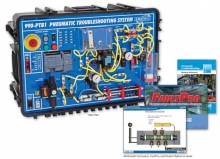 Item Number:990-PTB1
 -
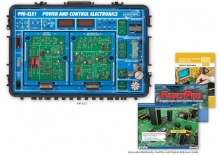 Item Number:990-ELE1Amatrol’s Portable Power and Control Electronics Learning System (990-ELE1) covers how to operate, adjust, and troubleshoot electronic components, circuits, and systems used in machine applications. The portable learning system allows for on-the-go exploration of the fundamental concepts of industrial power and control electronics, such as measuring temperature, speed, and analog signals. The 990-ELE1 provides skills and topics that will be invaluable in industries like manufacturing, transportation, energy, and construction.
 -
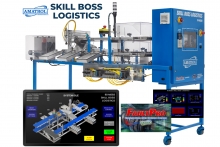 Item Number:95-MSB3The Amatrol Skill Boss Logistics offers a performance-based assessment for evaluating the skills and competencies of future supply chain automation technicians.
 -
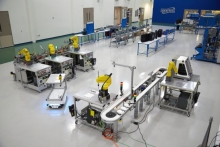 The Smart Factory is a fully connected and flexible manufacturing system that connects its physical systems, operational information, and human assets to control manufacturing, maintenance, inventory, and supply chain operations.
 -
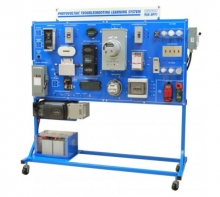 Item Number:950-SPT1The 950-SPT1 teaches students connection, operation, programming, and troubleshooting of AC/DC and grid-connected systems. The curriculum is PC-based multimedia that is highly interactive. It allows students to use the learning style best for them – reading, listening, visual. The 950-SPT1 supports the NABCEP (North American Board of Certified Energy Practitioners) test for Certified Solar Photovoltaic System Installer.
 -
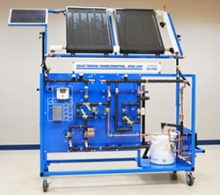 Item Number:950-STOL1The 950-STOL1 includes all components needed to develop hands-on, job ready skills: all solar specific components as well as balance of system items. The learning system contains a mobile workstation, multiple component circuit panels, a solar collector unit, fault insertion, PC-based multimedia student curriculum, and instructor’s assessment guide. An optional sun simulator is available to facilitate classes indoors when outdoor conditions do not support solar heating.
 -
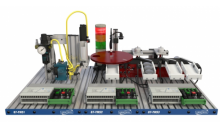 Item Number:870-PTAB82Amatrol’s Tabletop Mechatronics is a portable, durable, affordable learning system that forms a fully automated line to teach real-world mechatronics skills. This learning system features a pick-and-place, gauging, and inventory station, all of which fit on a standard tabletop!
 -
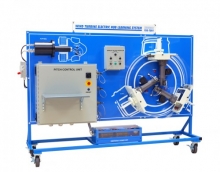 Item Number:950-TEH1Amatrol's 950-TEH1 Turbine Electric Hub Troubleshooting Learning System teaches students adaptive skills for wind turbine operation, adjustment, and troubleshooting in a wide variety of situations. The 950-TEH1 allows students to develop and practice component, subsystem, and system-level skills. The fully functional, scaled-down utility-scale turbine electric hub. The Turbine Electric Hub Troubleshooting Learning System includes...
 -
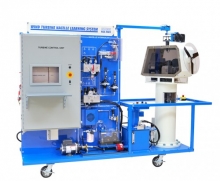 Item Number:950-TNC1Amatrol’s 950-TNC1 Turbine Electric Hub Troubleshooting Learning System allows students to learn the skills required for wind turbine operation, adjustment, and troubleshooting.
 -
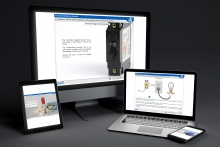 Amatrol’s virtual trainers replicate physical systems in such detail that students can build skills even when they don’t have access to actual equipment.