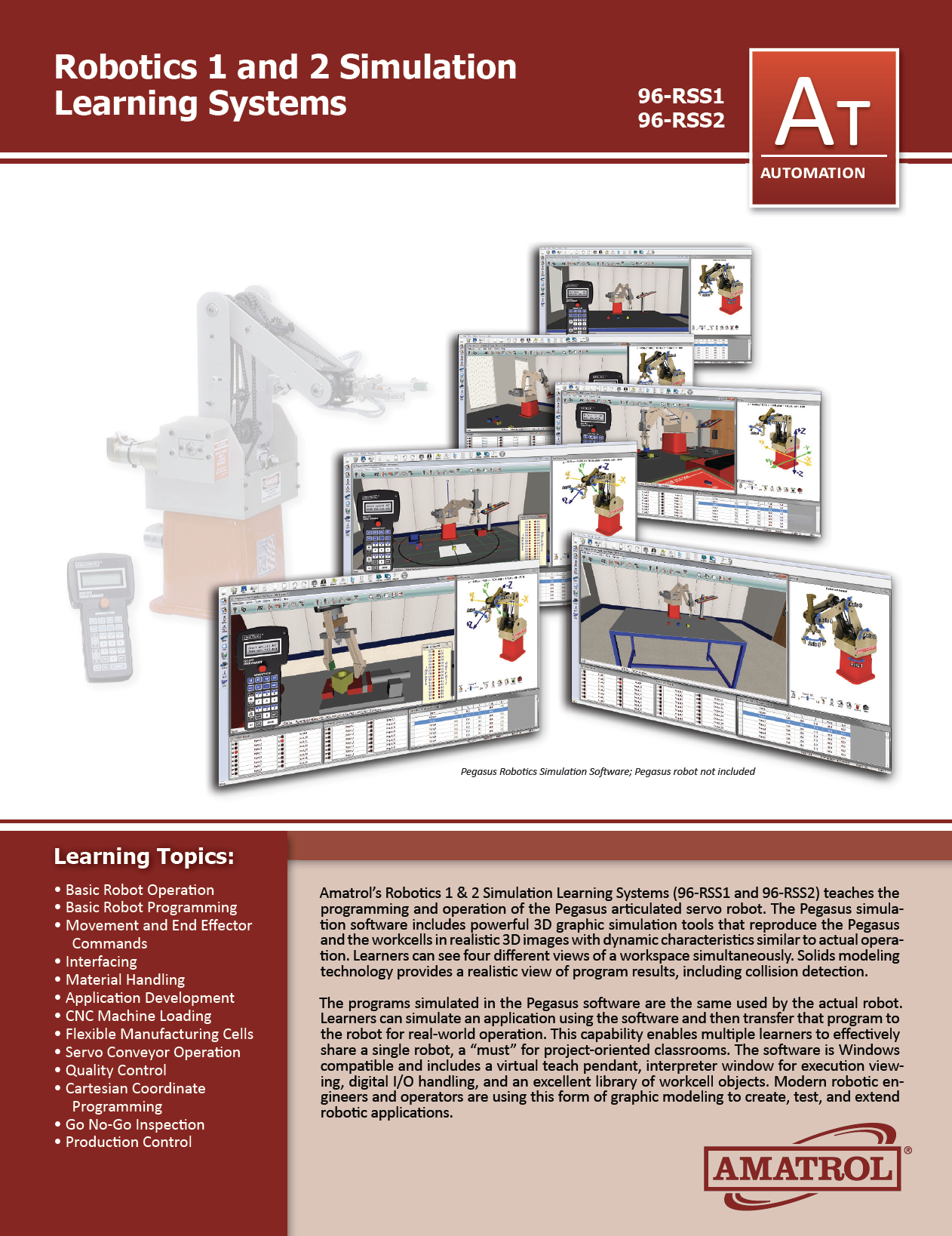


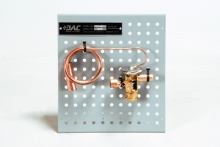
The full-size, fully-detailed example gives learners a first-hand view into a component that is found in various applications worldwide. This professionally-crafted, yet-economical component sample will enhance any training activity relating to commercial and industrial air conditioning and refrigeration systems.
Amatrol’s 96-PLS1T Plastics Technology 1 Learning System is designed to teach modern technical skills in plastics and polymer science using injection molding training. Plastics are found in almost any industry in an astounding array of applications, including clothing, housing, autos, aircraft, packaging, energy, electronics, biomedical devices, and many more. They impact virtually every aspect of modern industry. Understanding how to work with plastics is an important technical skill for engineers, technicians, and operators.
Amatrol’s high school pneumatics training system (96-PNE1) teaches learners how to operate and install basic pneumatic systems, analyze performance, and design basic pneumatic circuits. Pneumatic power is a foundation of industry used in applications across fields like agriculture, pharmaceuticals, automation, and many more!
The high school pneumatics training system includes a basic pneumatics panel, basic pneumatics instrumentation panel, and a pneumatic hose and fittings set. The system features industrial-quality components to prepare learners for what they will encounter on the job. Learners will use these components to study major topic areas, such as pneumatic power systems, basic pneumatic circuits, principles of pneumatic pressure and flow, and pneumatic speed control circuits. The system can also be expanded with Amatrol’s Pneumatics 2 Learning System to teach intermediate pneumatic knowledge and skills.
Amatrol’s Pneumatics 2 Learning System (96-PNE2) builds on basic pneumatic skills by introducing more advanced pneumatics training concepts, such as air logic, ways to decelerate a pneumatic cylinder, and how to connect and operate a vacuum generator. Learners will have the opportunity to study these concepts while working with a hands-on training module, which enables the practice of skills such as connecting and operating a two-way valve and designing a pneumatic circuit to control a reciprocating cylinder; this approach of simultaneously teaching theory and practice reinforces each element and results in a thorough understanding of the topic. This system requires Pneumatics 1, a computer, and a Hand Tool Package (41221).
Pneumatics 2 includes directional control valves, check valve, pneumatic cylinder, Venturi block, assorted filter elements, and much more. Amatrol’s commitment to using top-flight, industry-standard materials ensures that learners work with components they’ll actually see on the job. This attention to quality and detail culminates in a durable, attractive, user-friendly learning system that will last for years.
Print reading skills are essential for anyone directly involved in developing and manufacturing products. Engineers and designers communicate all the technical information required to make a product via prints. Manufacturing personnel must correctly interpret the prints to create the product. Technicians use prints to understand how to repair and troubleshoot machinery. Beginning with the basics, Amatrol’s 96-PR1 Print Reading 1 Learning System leads students to a thorough understanding of print reading techniques and skills.
The 96-PR1 is set up to accommodate either self-directed or traditional classroom formats. This learning system can be used by itself and is also a core system in Amatrol’s project-based learning program. The Print Reading 1 Learning System uses interactive computer- based instruction with both theory and hands-on tutorials consisting of text, digital video, voice, online self-review tests, interactive simulations, color diagrams and color photos. Student curriculum covers industry related skills in print reading, including use of different reference coordinates, creating and editing drawings, using technical drawing views and dimensions, multi-view drawings, and developing schematic diagrams.
Amatrol’s Robotics 1 Learning System (96-ROB1A) teaches articulated arm servo robotics and how it’s applied in industrial tasks like assembly, material handling, and inspection. This introductory robotics training system includes a 5-axis articulated servo robot arm with a 360-degree work envelope, mobile workstation, industrial controller, and state-of-the-art teach pendant. Using these real-world components, learners will be able to practice over 140 executable commands using the powerful MCL II programming language.
The system also includes in-depth multimedia curriculum covering the major topic areas of basic robot operation, programming, interfacing, and material handling. For example, learners will study: homing procedures for a servo robot; commands like grasp, release, and Pmove; and applications of robots in material handling. Amatrol’s combination of theoretical knowledge and hands-on practice allows learners to gain both conceptual and practical knowledge, broadening competency in robotic applications.
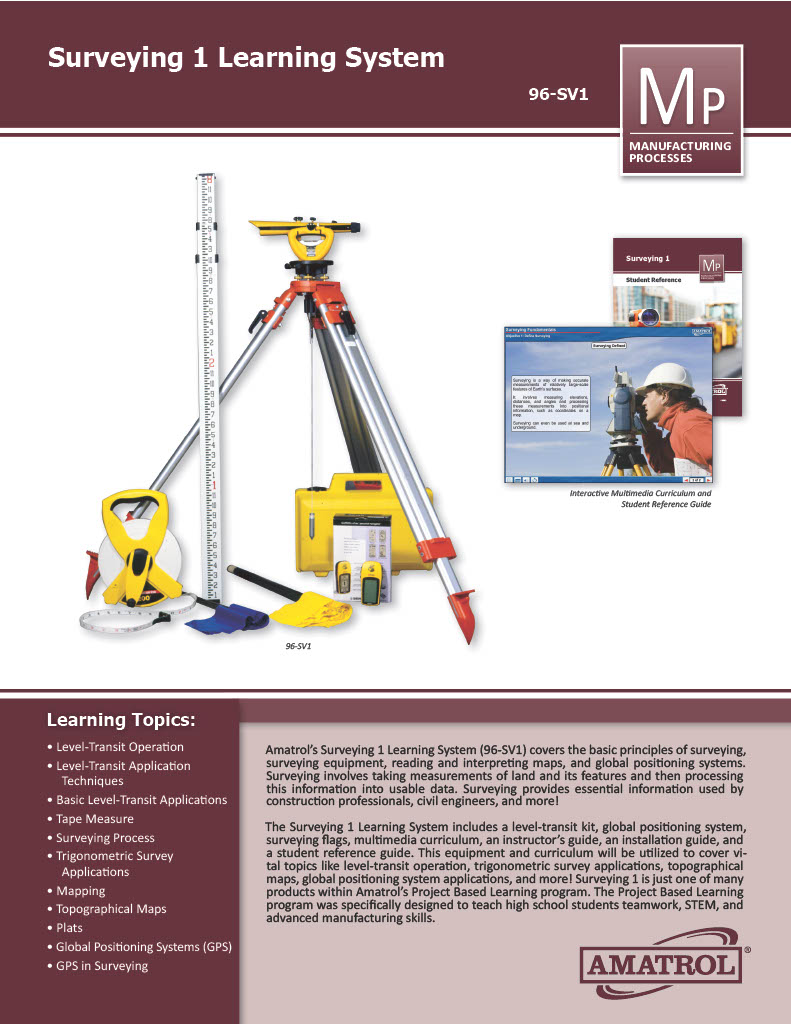
Amatrol's Robotics 1 and 2 Simulation Learning Systems (96-RSS1 and 96-RSS2) teaches the programming and operation of the Pegasus articulated servo robot. The Pegasus simulation software includes powerful 3D graphic simulation tool that reproduce the Pegasus and workcells in realistic 3D images with dynamic characteristics similar to actual operation. Learners can see four different views of workspace simultaneously. Solids modeling technology provides a realistic view of program results, including collision detection.
Intro to Civil Engineering
Amatrol’s Structural Engineering 1 Learning System (96-SE1) introduces high school students to the field of civil engineering. Civil engineers are responsible for creating structures such as skyscrapers, bridges, tunnels, dams, mass transit systems, water treatment facilities, and many more structures that we use every day for living, transportation, and industry. Learners will learn the fundamentals of structural analysis as well as bridge design and construction.
The structural engineering training system includes the T9004 Structural Testing Systems consisting of a workstation, bridge component sets, a test fixture set, indicator package, bridge designer software, supplemental CD, and interactive multimedia student curriculum. These components are used to teach topics such as civil engineering careers, structural stability, force vectors, and bridge design.
Intermediate Structural Engineering Training System for High School
Amatrol’s Structural Engineering 2 Learning System (96-SE2) adds to the Structural Engineering 1 Learning System (96-SE1) to teach statics, data acquisition, and bridge design analysis. The data acquisition system uses structural members equipped with stain gauges to measure the forces acting on a structure, constructed by the learners, and the system records these values to provide a clear picture of how the structure is reacting to the applied force. Through calculations and data acquisition analysis, intermediate structural engineering learners will analyze the forces in truss bridge designs.
The intermediate structural engineering training system includes a data acquisition system, bridge components fitted with strain gauges, a test fixture hardware package, and interactive multimedia student curriculum. The learning content covers topics such as bending stress and the moment of inertia, data acquisition, and truss bridge analysis.
Advanced Structural Engineering Training System for High School
Amatrol’s Structural Engineering 3 Learning System (96-SE3) covers a variety of foundational industrial topics including: concrete mixing, placement, and testing; how to control column and beam deflection; preventing columns from buckling; and designing buildings to both support normal loads and to stand up to environmental elements. These skills can be used to move into fields like construction, engineering, and architecture. The 96-SE3 utilizes components from the Structural Engineering 1 Learning System (96-SE1) and builds on knowledge introduced in that system.
The Advanced Structural Engineering training system includes concrete and metal beam component sets and a building component set that allow learners to practice real-world skills while they study the safety steps, advantages of certain materials, and overall theoretical knowledge behind these foundational engineering concepts. Some of the major topic areas covered by the 96-SE3’s curriculum include beam and column design, the fundamentals of concrete, building design, and building construction. This interlacing of theoretical knowledge and hands-on skills builds learner competencies and gives them the knowledge to move on to more advanced structural engineering topics.
Because surveying is utilized in so many aspects of industry, the skills taught by the Surveying 1 Learning System (96-SV1) opens the doors to careers in various fields, such as manufacturing, transportation, and construction. Amatrol’s Surveying training system introduces the fundamentals of surveying, which includes focusing on determining the terrestrial or three-dimensional position of points and the distances and angles between them; this signature Amatrol approach to curriculum reinforces both theory and practice, which produces a well-rounded understanding of the topic.
After completing this training system, learners will be able to operate surveying and mapping tools, including global positioning systems (GPS) associated with surveying, but will also understand the relevant key concepts.
Pages
-
 Item Number:373-521
 -
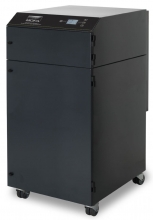 BOFA’s AD 1000 iQ high-end laser extraction system combines extremely large filter capacity with high airflow and pressure rates, making it the ideal choice for heavy-duty applications that generate large amounts of particulate and gaseous organic compounds.
 -
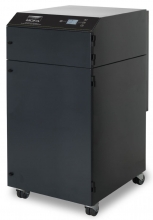
BOFA’s AD 1500 iQ is the ideal choice for heavy-duty applications that generate large amounts of particulate and gaseous organic compounds.
Performance has been further enhanced with the inclusion of several features including BOFA’s acclaimed iQ Operating System, making the AD 1500 iQ one of the most advanced systems available.
The iQ system takes performance and safety parameters to a new level and ensures that maintenance, downtime, and ownership costs are kept to a minimum.
-
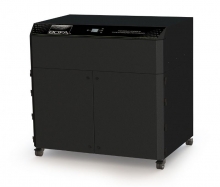 The AD 2000 iQ’s technology delivers superior and measurable performance, ensuring airflow and filtration is maintained even when particulates start to build up. It’s thanks to the vacuum/pressure which is three times greater than that of its predecessor, the AD 2000.
 -
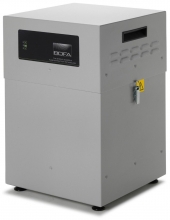
Low airflow entry-level laser fume extractor incorporating DeepPleat pre filter technology and large combined filter.
BOFA’s Advantage 250 fume extraction and filtration system has been designed to provide a cost-effective solution for light duty applications. This compact and extremely quiet system is ideal for use in schools, sign making workshops, small-scale industrial environments and light laser coding applications.
-
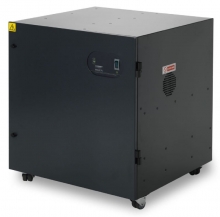
The Advantage Base C180 has been designed specifically for the GCC C180 laser engraver. The dimensions of the unit allow the C180 to fit perfectly onto the extractor, effectively doubling it up as a workstation. The unit is also offered with an onboard air compressor to provide the laser with its air assist requirements and comes complete with extraction hose kit and compressor link up on compressor models.
-
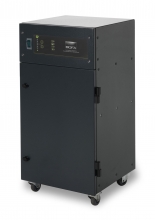
The compact system designed for small-scale industrial sites and light laser coding applications.
The AD Nano+ fume extraction and filtration system has been designed as a cost-effective solution for light to medium duty applications and is the ideal choice for installations where floor space is limited.
-
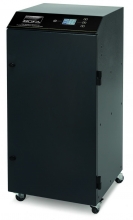
The AD Oracle iQ is our most technically advanced laser fume extractor, combining a powerful range of unique features into one compact unit.
This versatile unit can be used across a range of laser applications and the revolutionary auto-voltage sensing blower automatically self-adjusts to run on any voltage worldwide.
Our inline AD Cyclone has been designed to separate lower particle sizes during laser marking process.
-
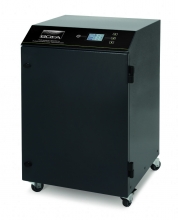 Introducing BOFA’s most technically advanced compact laser fume extractor. The AD Oracle SA iQ has been enhanced with BOFA’s iQ Operating System, RFA and ACF technology and packs a powerful range of unique features into one compact unit.
 -
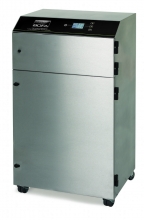
The AD PVC iQ extraction system has been designed to effectively deal with the corrosive nature of the fumes generated when lasering PVC materials.
The latest design specification now offers many of the features associated with our “Best in class” AD Oracle iQ model as standard but in addition all internally exposed surfaces have been coated to resist the corrosive nature of the fume and each unit is fitted with HCL and VOC sensors which continually monitor the exhaust air of the unit giving added safety assurance.