DAC Worldwide’s Single-Phase Transformer Cutaway (273-912) is a detailed and professionally-crafted single-phase transformer cutaway that depicts a common shell-type, single-phase transformer.
Materials for application-specific requirements such as flame smoke and toxicity, HDT or mold durability.
Medically certified materials for devices where aesthetics, durability and biocompatibility are critical.
Impact-resistant resins for functional applications that need to perform under stress and high-load conditions.
Additive manufacturing will only penetrate end-use production if and when manufacturers have access to engineering-grade materials that bring the required properties to their applications - at the time of printing and throughout its lifetime.
Somos® materials scientists are putting their industry-proven photopolymers toolbox to work to develop high-performance materials for DLP/LCD technology. The combination of engineering-grade materials with fast DLP technology at lower cost of entry makes 3D printing accessible to companies looking to transition to additive manufacturing.
Choose from application-specific materials that have proven performance and come with industry-standards testing data.
Preliminary information, subject to change
Processed with SAF™ technology on the Stratasys H350 3D printer, Stratasys High Yield PA11 delivers production-grade plastic parts for high-volume demands — driving new areas of business growth. Stratasys High Yield PA11 enables a high nesting density while maintaining high part consistency to deliver production-level yields.
In additive manufacturing, PA12 is the go-to material for prototyping. But in traditional high-volume production of end-use parts, PA11 is much more widely used due to its higher ductility and higher impact resistance, as well as its suitability for a wider range of industry applications. PA11 is also eco-friendly and 100 percent bio-based from sustainable castor oil.
The mechanical data below provides a good characterization of the entire build volume across multiple printers. It was generated after measuring more than 2000 tensile specimens (972 in X/Y and 1,080 in Z direction), 540 flexural specimens (360 in X/Y and 180 in Z) and 540 impact specimens (360 in X/Y and 180 in Z), all printed in 36 builds from 5 different printers. These specimens were widely and regularly distributed throughout the build volume, in a 12% nesting density build and produced with default printer settings.
SAF™ PA12 is available for use with the H350, a material offering numerous benefits, most notably in delivering a high level of accuracy. Tight thermal control on the H350 leads to consistent parts and high nesting densities, and thus more parts per build. The following data highlight the capability of SAF™ PA12.
Stay competitive with best-in-class consistency
Grow your part production business for various industries and applications with a workflow you can fully control. Built for high-volume, short-run production, the Stratasys H350 3D printer gives you control of your materials, workflow, production, and costs while delivering consistency and accuracy print after print. The Stratasys H350 is the first release of the H Series™ production platform, which has Selective Absorption Fusion™ SAF™ technology at its heart to deliver functional, production-grade parts with best-in-class* consistency.
As with other manufacturing techniques, the 3D printing process can be challenging and demands a level of expertise and familiarization.
This guide aims to help designers produce quality, cost-effective parts on the Stratasys® H350™ 3D printer. The guide provides information for both new and experienced users.
The topics covered in this guide describe tools and methods for optimizing design features, strength, and durability of printed parts and ensuring that the parts meet your expectations. It provides best practices and tips on designing for additive manufacturing and examples of how to take advantage of Stratasys' unique features to get the most out of your H350 printer while minimizing printing costs and post-processing issues.
The Stratasys H350™ 3D printer, leveraging Selective Absorption Fusion™ SAF™ technology, as part of the H Series™ production platform, is designed to deliver functional, production-grade parts with best-in-class* consistency. Grow your part production business and stay competitive with a workflow you can control and cost per part you can accurately predict.
The H350 lets you tailor your production to suit your application. Re-use unfused powder to reduce material costs. Fine-tune print settings to your specification – all whilst using SAF technology to achieve accurate, functional parts consistently. Select finishing processes and equipment to maximize production efficiency in your business.
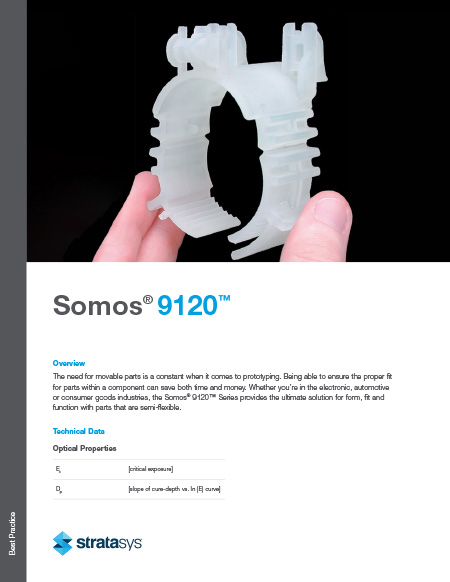
The need for movable parts is a constant when it comes to prototyping. Being able to ensure the proper fit for parts within a component can save both time and money. Whether you’re in the electronic, automotive or consumer goods industries, the Somos® 9120™ Series provides the ultimate solution for form, fit and function with parts that are semi-flexible.
Pages
-
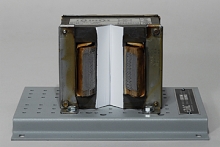 Item Number:273-912
 -
 Item Number:SSLTrain skid steer loader operators safely and efficiently with Simlog’s simulator. Ideal for industrial training programs focused on reducing risk, cost, and operator variability.
 -
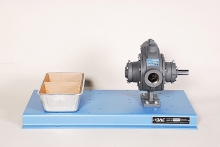 Item Number:275-139DAC's 275-139 is a realistic industrial pump for use in classroom and laboratory training relating to process pumps.
 -
 Item Number:895Amatrol’s Smart Controls Troubleshooting Workstation (895) teaches hands-on programmable logic controller (PLC) troubleshooting skills needed in various applications with Industry 4.0 technologies. Trainees will learn how to operate, program, and troubleshoot PLCs that interface with many applications, including electro-pneumatics; motor control; temperature control; variable frequency drives; smart sensors; process control; and I/O Link communications.
 -
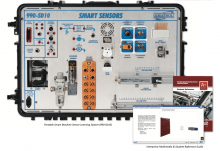 Item Number:990-SD10Amatrol’s Portable Smart Machine Sensor Learning System (990-SD10) offers training for building skills with smart capacitive, inductive, photo, ultrasonic, and more, all within an easily portable case. The Smart Machine Sensor training system is instrumental for learners to understand Industry 4.0 concepts and practice with components commonly found in Industrial Internet of Things (IIoT) environments.
 -
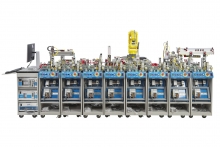 Amatrol Smart Factory training system and in-depth curriculum teaches all aspects of smart factory maintenance and operation.
 -
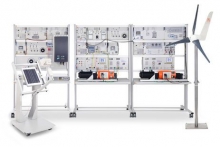 Item Number:ESG 1Features 9 stations that can be individually configured.
 -
 Item Number:87-SWPF1VThe 87-SWPF1V Smart Robot Logistics Palletizing Workcell, which includes a mobile workstation with a FANUC 6-axis robotic arm, teaches students how to operate, program, maintain, and troubleshoot a robotic palletizing workcell.
 -
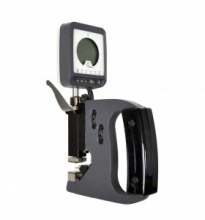 Item Number:99-PG2The 99-PG2 includes a digital snap gauge and a master part turned to precisely 0.500”, which learners use to calibrate the device. As the learners work their way through the curriculum, they use the snap gauge to measure custom parts from the 990-PG1 that ensure a complete learning experience.
 -
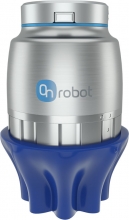 Item Number:SG-a-H, SG-a-S, SG-b-HThe OnRobot Soft Gripper is able to pick a wide array of irregular shapes and delicate items, making it ideal for pick-and-place applications in food and beverage production, as well as manufacturing or packaging.