DAC Worldwide's Vertical Thermosyphon Reboiler Heat Exchanger Training Model (289) is a highly-detailed scale model of a vertical thermosyphon reboiler, supporting training in the operation and maintenance of industrial heat exchangers.
Date: Wednesday, April 9 to Friday, April 11, 2025
Location: Kalahari Resort, Round Rock, Texas
Date: Wednesday, April 2 to Friday, April 4, 2025
Location: Embassy Suites, Grapevine, Texas
Date: Friday, August 1, 2025
Date: Tuesday, April 8 to Thursday, April 10, 2025
Location: Shangri-La Resort, Grand Lake, Oklahoma
The TacMed Clinical Response Lower (CRL) is designed to provide unparalleled realism and durability in simulating traumatic injuries for medical training scenarios.
The CRL features a full left leg with a hemostatic wound at the inguinal crease, requiring packing with gauze and measurable pressure application. Additionally, it includes a right leg amputation at the knee with a realistic tourniquet site and popliteal artery bleed. These features, coupled with advanced sensor technology, offer trainers and learners instantaneous feedback on applied pressure, bleeding occlusion time, and blood loss volume for after-action reporting.
Key Features
- Full-motion legs with autonomous response to treatment
- Packable wound, amputation, active bleeding & occlusion response, pulses, and tourniquet
- Intraosseous infusion, intramuscular injection, Foley catheter insertion
- Real-time digital feedback, crepitus (crushed pelvic region cue), and remote control capabilities
- Water-resistant, easy to clean, and maintain
The CRL can be paired with any upper torso trainer to optimize your training experience. Download our product flyer to explore all the features in detail and enhance your medical training simulations today!
Lower body simulators are advanced training tools designed to provide realistic and comprehensive education for medical professionals. These simulators replicate the anatomy and physiological functions of the lower extremities, including muscles, bones, joints, and vascular structures. They are used extensively in medical and nursing schools to enhance the practical skills of students, allowing them to practice procedures such as injections, suturing, and emergency interventions in a controlled and safe environment. By simulating real-life scenarios, these tools help trainees build confidence and competence, reducing the likelihood of errors in actual clinical settings.
One of the key features of lower body simulators is their ability to mimic various pathologies and conditions, from fractures and dislocations to vascular diseases and soft tissue injuries. This versatility enables educators to create diverse training modules that cater to different learning needs and specialties. For instance, students can practice orthopedic procedures like setting fractures and performing joint aspirations, or they can focus on vascular access techniques such as placing catheters or performing arterial punctures. The detailed anatomical accuracy and functional realism of these simulators ensure that learners gain a thorough understanding of both normal and pathological conditions of the lower extremities.
Moreover, the use of lower body simulators supports the shift towards more hands-on, experiential learning in medical education. By integrating these simulators into their curricula, educational institutions can provide students with ample opportunities to practice and refine their skills before encountering real patients. This not only enhances the quality of training but also improves patient outcomes by ensuring that future healthcare providers are well-prepared and proficient in essential clinical procedures. The ongoing development and innovation in simulation technology continue to push the boundaries of medical training, making it possible to achieve higher levels of precision and effectiveness in education and practice.
Upper body simulators are cutting-edge educational tools that provide a realistic and detailed representation of the human upper body, encompassing the thorax, arms, and head. These simulators are integral to medical and nursing education, offering hands-on practice in various procedures such as intravenous insertions, chest compressions, airway management, and surgical interventions. By incorporating realistic anatomical features and physiological responses, upper body simulators enable students to develop essential clinical skills in a safe, controlled environment, bridging the gap between theoretical knowledge and real-world application.
A standout feature of upper body simulators is their ability to simulate various medical conditions and scenarios. For example, they can replicate respiratory distress, cardiac events, and trauma injuries, allowing learners to practice critical interventions like intubation, defibrillation, and wound management. This versatility ensures that students are well-prepared for diverse clinical situations they may encounter in their professional careers. The high-fidelity design of these simulators includes lifelike skin, accurate anatomical landmarks, and responsive feedback systems, which help students refine their techniques and decision-making skills with precision and confidence.
Integrating upper body simulators into medical training programs supports a more interactive and immersive learning experience. These simulators facilitate repetitive practice and immediate feedback, which is crucial for mastering complex procedures and improving patient care outcomes. Educational institutions utilizing upper body simulators can offer their students a robust training regimen emphasizing experiential learning, critical thinking, and hands-on proficiency. As technology advances, upper body simulators are becoming increasingly sophisticated, providing even more realistic and effective training opportunities for the next generation of healthcare professionals.
Whole body simulators from TacMed Solutions represent the pinnacle of medical training technology, providing comprehensive, lifelike platforms for practicing a wide range of medical procedures and emergency interventions. These simulators encompass the full anatomical structure of the human body, enabling learners to engage in realistic training scenarios that cover everything from basic first aid to advanced trauma care. Designed with detailed anatomical accuracy, TacMed Solutions' whole body simulators feature realistic skin, internal organs, and physiological responses, allowing trainees to develop and refine their skills in a safe and controlled environment.
One of the key advantages of whole body simulators is their ability to simulate complex, multi-system injuries and medical conditions. Trainees can practice handling scenarios such as polytrauma, cardiac arrest, and respiratory failure, gaining invaluable experience in performing coordinated, life-saving interventions. The simulators' advanced feedback systems provide real-time responses to medical actions, offering immediate, actionable insights that help users improve their techniques and decision-making processes. This immersive training experience enhances technical proficiency and builds the confidence needed to manage critical situations in real-life clinical settings effectively.
Moreover, TacMed Solutions' whole body simulators are designed to support various training environments, from classroom instruction to field exercises. Their durability and versatility make them ideal for use in various educational settings, including medical schools, nursing programs, and emergency response training. By integrating these simulators into their curricula, institutions can offer a more dynamic and interactive learning experience that emphasizes hands-on practice and critical thinking. The commitment to quality and realism in TacMed Solutions' whole body simulators ensures that learners are thoroughly prepared to deliver high-quality care and improve patient outcomes in their professional practice.
Pages
-
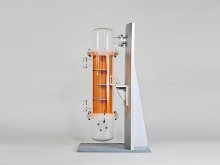 Item Number:289
 -
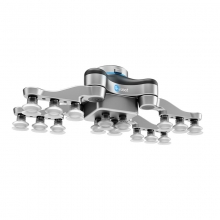 Item Number:VG10The compact OnRobot VG10 Universal Robot Vacuum Gripper doesn't require a compressor or air supply bringing flexibility to your production line and saving maintenance costs. It has flexible arms and an adjustable vacuum enabling the VG10 to handle a variety of objects in many different sizes.
 -
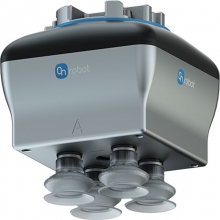 Item Number:VGC10The OnRobot VGC10 electrical compact universal robot vacuum gripper has unlimited customization possibilities. Smaller than the VG10, the VGC10 can fit into tight environments to extend your automation possibilities.
 -
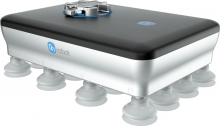 Item Number:VGP20With payloads up to 20kg, the OnRobot VGP20 is a powerful electric powered universal robot vacuum gripper ideal for quickly and cost-effectively automating the palletizing of cardboard boxes, as well as handling bulky, porous, and irregularly shaped objects.
 -
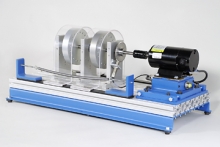 Item Number:203-000DAC Worldwide’s Vibration Analysis Training System (203-000) is a heavy-duty learning package that allows for in-depth training in vibration analysis, using a vibration meter, gear/belt drives, and bearing faults.
 -
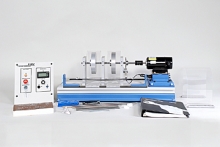 Item Number:203-PACDAC Worldwide’s Vibration Analysis Training System Plus (203-PAC) is a heavy-duty learning package that allows for in-depth training in vibration analysis, using a vibration meter, gear/belt drives, and bearing faults.
 -
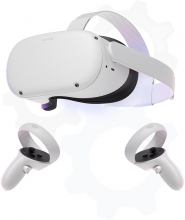 With our Workplace Safety package, you get four modules that allow learners to put safety training into practice in a safe, virtual environment.
 -
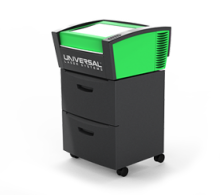 Item Number:VLS 2.30DTThe VLS2.30DT Desktop is a compact and economical entry-level platform. It offers a material processing envelope of 16" x 12" x 4" or 768 in³ and can be equipped with one 10.6µm CO2 laser source ranging in power from 10 to 30 watts or one 9.3µm CO2 30 watt laser source.
 -
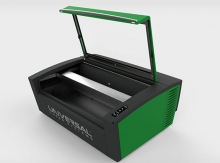 Item Number:VLS3.60DTThe VLS3.60DT is a compact and economical entry-level platform that offers a material processing envelope of 24" x 12" x 4" or 1,152 in³. The VLS3.60DT can be equipped with one of five 10.6µm CO2 laser sources ranging in power from 10 to 60 watts or one 9.3µm CO2 30 watt or 50-watt laser source.
 -
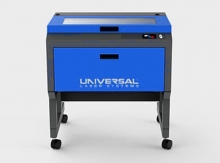 Item Number:VLS3.75The VLS3.75 is a free-standing platform with a materials processing envelope of 24" x 12" x 8.5" or 2,448 in³. The single laser platform supports a 10.6µm CO2 laser source ranging in power from 10 to 75 watts or one 9.3µm CO2 30 watt, 50 watt, or 75 watt laser source.