Amatrol’s Basic Pneumatics training system (85-BP) introduces pneumatic principles through a combination of Amatrol’s top-flight multimedia curriculum with hands-on industrial pneumatic skill-building. Topics covered in this learning system include single-acting cylinder circuits, pressure vs. cylinder force, and flow control valves, while the panels can be used to practice skills such as connecting and operating a needle valve to control actuator speed.
Simlog’s Skid Steer Loader Personal Simulator puts students at the controls of a typical skid steer loader equipped with either a bucket (with or without teeth) or forks, at work in a typical construction site. The simulator configuration options include Vertical or Radial lift path types, and two skid steer loader color combinations.
Operator Chair
A superior simulation experience with an authentic operator seat.
Key Benefits
- Fully assembled and USB-ready
- Steel platform on casters
- Adjustable seat and arm consoles
- Multi-purpose configurations
- Optional Two-Pedal Replica Control Unit
- ISO, H-Pattern or Standard (with pedals)
Simlog’s Forklift Personal Simulator Version 2 puts trainees at the controls of a typical sit-down, counter-balanced factory forklift with rear-wheel steering. Training scenarios are typical of factories, warehouses, and distribution centers, with various loads and storage arrangements, truck bays for loading and unloading, and a flatbed truck outside.
Operator Chair
A superior simulation experience with an authentic operator seat.
Key Benefits:
- Fully assembled with USB controls
- Steel platform on casters
- Adjustable seat, steering, and arm consoles
- 6 configurations available for the most common forklifts
- Integrated F/N/R Transmission Control Lever on the steering column
Simlog’s new Backhoe Loader Personal Simulator puts you at the controls of a backhoe loader at work in a typical construction site. Both SAE and ISO joystick patterns are available, and changing the point of view during the simulation is easy with joystick buttons, keyboard function keys, and mouse controls.
Nine Simulation Modules of increasing level of difficulty begin by teaching basic skills and coordination in early exercises such as “Bucket Positioning” and “Stockpiling”. Later Simulation Modules culminate skills training with exercises such as exposing buried utilities with the backhoe bucket on "Buried Utilities - Perpendicular Excavation."
Key Benefits of the Operator Chair:
- Fully assembled with USB controls
- Steel platform on casters
- Adjustable seat, steering, and arm consoles
- Multi-purpose configurations
Simlog's Forklift training person simulator features fifteen modules of increasing difficulty. Module 4: Slalom 3 - Reverse, Tall Loads has trainees pick up the load, drive through the slalom course in reverse, and place the load on the floor at the target position defined by a red outline.
Simlog's Reach Lift Truck Personal Simulator: Slalom 2 - Pick up the load, drive in reverse through the slalom course, and place the load on the floor at the target position defined by a red outline.
Simlog's Reach Lift Truck Personal Simulator: Slalom 1 Forward Driving - pick up the load, drive forward through the slalom course, and place the load on the floor at the target position defined by a red outline.
Simlog's Reach Lift Truck Personal Simulator: Selective Pallet Racks, Narrow Aisles - working with selective pallet racks, pick up each marked load and place it at its target position, using the overhead map for guidance. The loads and their target positions are mixed among the various heights of rack shelves.
Simlog's Reach Lift Truck Personal Simulator: Selective Pallet Racks 2, Standard Aisles - Working with selective pallet racks, pick up each marked load and place it at its target position, using the overhead map for guidance. The loads and their target positions are mixed among the various heights of rack shelves.
Simlog Mining Truck Personal Simulator - Corridor Driving Module: Trainees drive the truck through the corridor to the target. The trial ends when the truck is over the target and parked (gear in Park or Neutral with parking brake engaged).
Simlog Mining Truck Personal Simulator - Complete Haul Cycle 1 Module: Trainees drive the truck from the dumping zone to the rope shovel and position the truck under the dipper (the shovel's horn will sound when the truck is appropriately positioned).
Pages
-
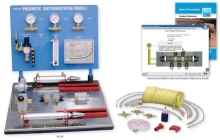 Item Number:85-BP
 -
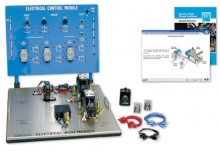 Item Number:85-EHThe Electro-Hydraulics training system includes an electrical control panel with relay control components and an electrical valve module with solenoid-operated hydraulic directional control valves and electrical/electronic sensors. These components will be used to study a variety of topics including electrical control systems, basic control devices, power devices, control relays, sequencing control, timer control, pressure control applications, and circuit applications.
 -
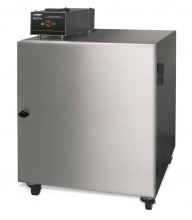
In the rare event that a burning ember or spark is drawn into the fume extraction unit, there is the possibility that debris in the filters could ignite. Although any resultant fire would typically be retained within the fume extraction unit, this would cause significant damage and in extreme circumstances, the risk may extend beyond the extraction unit. For processes where such risks have been identified, additional protection in the form of an in-line firebox is an additional precaution.
-
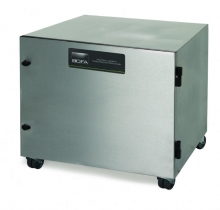
The BOFA inline pre-filter 1000 has been designed specifically for applications that generate high amounts of dust or particulate.
This inline filter unit is positioned alongside the main BOFA fume filtration system to increase the overall filter capacity and extend the life of the main filters. The DeepPleat DUO pre-filter incorporates a massive drop-out chamber within the filter, having a volume area of 15ltrs. Above the drop-out chamber but still within the housing there is a sealed 200mm deep pleat layer of F8 media giving a surface area in excess of 30 sq meters.
-
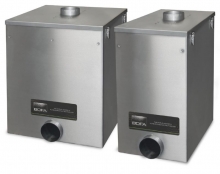 The BOFA inline prefilters have been designed specifically for applications that generate high amounts of dust or particulate.
 -
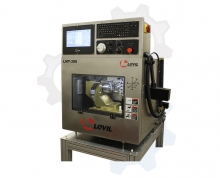 Item Number:LMT-300LMT-300 CNC Mill-Turn is a cutting-edge aluminum cutting machine
 -
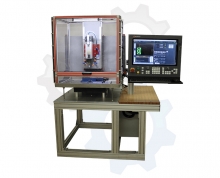 Item Number:LMV-300 CNC
The LMV-300 CNC machine dubbed “Quicksilver” delivers high rigidity, high accuracy and high-speed machining for all your cutting needs. The entire machine’s construction stably attaches to a granite bed thus dampening vibrations and making the machine a robust system. The cornerstone of the machine is that it is literally made from stone.
-
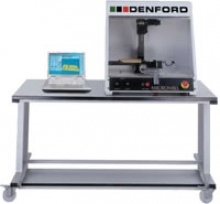 A compact 3 axis CNC micromill milling machine with totally enclosed interlocking guards - the ideal introduction to small part CNC manufacture. Variable spindle speeds and feedrates make the MicroMill ideal for cutting resistant materials such as wax, plastic, acrylic, aluminum and free cutting alloys.
 -
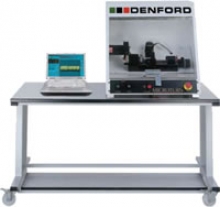 A compact 2 axis CNC lathe, with totally enclosed interlocking guards - the ideal introduction to small part CNC manufacture. Variable spindle speeds and feedrates make the MicroTurn ideal for cutting resistant materials such as wax, plastic, acrylic, aluminum and free cutting alloys.
 -
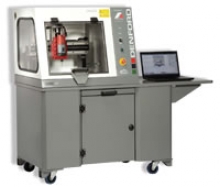 Denford's high-spec / low-cost solution for all your routing, milling and engraving needs. The MRC 40 has a powerful 500W spindle motor and offers high speed manufacture linked with a large working envelope. This versatile machine handles small engraving jobs, and the large working envelope and Z axis capability (110mm) is perfect for the manufacture of large 3D designs. Set-up and tool changes are a simple process, and the MRC 40 has a host of optional extras for specialist applications.