Explore sustainable building technologies with the Green Energy in Buildings Trainer (122-01). This innovative educational tool offers hands-on learning experiences, real-time energy data monitoring, and practical activities to engage students in STEM education focused on energy efficiency and green technology.
Bring precision prototyping to your desktop.
With the upgraded Objet30™ Prime and Pro 3D printers, accuracy and versatility don’t require a large footprint. Even with limited space and budget, PolyJet Technology™ makes creating beautiful, realistic models simple. Prototype for a variety of applications, from consumer electronics to medical devices.
Choose from nine model materials ranging from rigid opaque to simulated polypropylene, and build prototypes with specialized properties and smooth finishes. The Objet30 Prime offers additional flexible and biocompatible materials for medical device prototyping.
Biocompatible Digital ABS Plus™1 is designed to simulate standard ABS plastics by combining high-temperature resistance with toughness. The material significantly improves the mechanical performance of biocompatible parts for medical prototyping and functional performance testing. The material will allow you to create cutting guide2 models that are sterilizable and biocompatible.
The Biocompatible Digital ABS Plus is suitable for parts that require PolyJet™ technology’s highest possible impact resistance, shock absorption, and biocompatibility. The material is validated for permanent (more than 30 days) contact with intact skin, limited (less than 24 hours) contact with breached or compromised surfaces, as well as limited contact with tissue and bone (via external communication or implantation). /p>
1 Biocompatible Digital ABS Plus is fabricated using MED515 Plus together with MED531
2 With approved 3rd party 510k cleared segmentation software.
3 WSS™150 is not biocompatible.
Upgrade your Workflow
With the Objet30 V5 3D printer from Stratasys.
The Objet30 provides accurate and versatile 3D printing - all from your desktop. With excellent print resolution, the Objet30 lets you create single material parts with smooth surfaces, small moving parts, and details like thin walls. The roomy tray size provides versatility for various consumer goods, electronics, medical devices, and more. Thanks to GrabCAD Print, the Objet30 also provides a user-friendly workflow, so you can get printing faster and easily manage print jobs.
Learn five reasons why you need desktop 3D printing.
LOCTITE 3D IND402 is a single-component elastomer material with high elongation and high resilience, excellent tensile strength, and high energy return while also not requiring thermal post-processing.
Parts can be printed with various DLP platforms.
This guide should be used to compare Origin-certified materials with each other. Please refer to individual material data sheets for more info.
Resilient high-resolution elastomers for applications requiring excellent tear strength or rebound performance.
Fast printing materials for end-use applications requiring cosmetic surfaces, fine features, and high accuracy.
Pages
-
 Item Number:122-01
 -
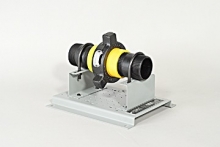 Item Number:295-708DAC Worldwide's Hammer Union Cutaway (295-708) is a sectioned piping component sample for training in the design, application, use, and safety considerations for hammer unions.
 -
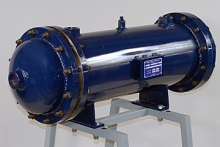 Item Number:238-000DAC Worldwide’s Heat Exchanger Maintenance Training System (238-000) consists of a full-size shell and tube industrial heat exchanger. This flanged, fixed tube, bundle-type heat exchanger represents one of the most common types of heat exchangers learners will encounter on the job.
 -
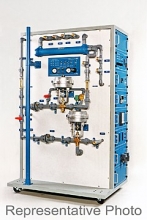 Item Number:607DDAC Worldwide’s Heat Exchanger Process Control Trainer (607D) is a full-sized, working fluid system that allows for hands-on training in measurement and control as it relates to temperature in an industrial fluid process system.
 -
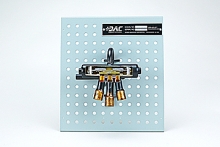 Item Number:373-505This Heat Pump Reversing Valve Cutaway provides a full cutaway view of the reversing valve that exposes the complete internal components and operating principles.
 -
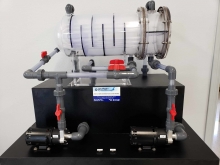 Training aids for heat transfer skills include industrial components like a U-Tube Heat Exchanger, Vertical Thermosyphon Reboiler, Multi-Port Plate Exchanger, Multi-Pass Floating Head, Fixed Tube Sheet Single Pass, and more
 -
 Item Number:TFX-C-HCSTThe TacMed Simulation Hemorrhage Control Skills Trainer - Classroom (HCST-C) is a medical intervention simulator designed to teach fundamental skills for tourniquet application and hemostatic wound packing.
 -
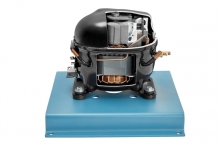 Item Number:373-110DAC Worldwide’s Hermetic Compressor Cutaway (373-110) is an expertly-sectioned example of a common fractional-horsepower refrigeration compressor, which facilitates and supports practical training in compressor design, operating principles, and maintenance.
 -
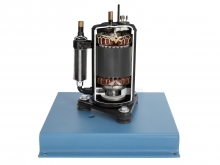 Item Number:373-160DAC Worldwide’s Hermetic Rotary Compressor Cutaway is an expertly-sectioned example of a common fractional horsepower rotary-type refrigeration compressor. The industrial learning device facilitates and supports practical training in AC compressor design, operating principles, and maintenance.
 -
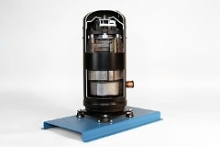 Item Number:373-130This Hermetic Scroll Refrigeration Compressor Cutaway provides a full cutaway view of the compressor body that exposes the complete internal components, and operating principles. Economically mounted on a formed-steel and powder-coated baseplate assembly, the product can be mounted on a variety of related optional display, storage, and workstation products.